How School Funds Are Used

In Missouri, public school finances are broken into separate funds for clarity and legal compliance primarily:
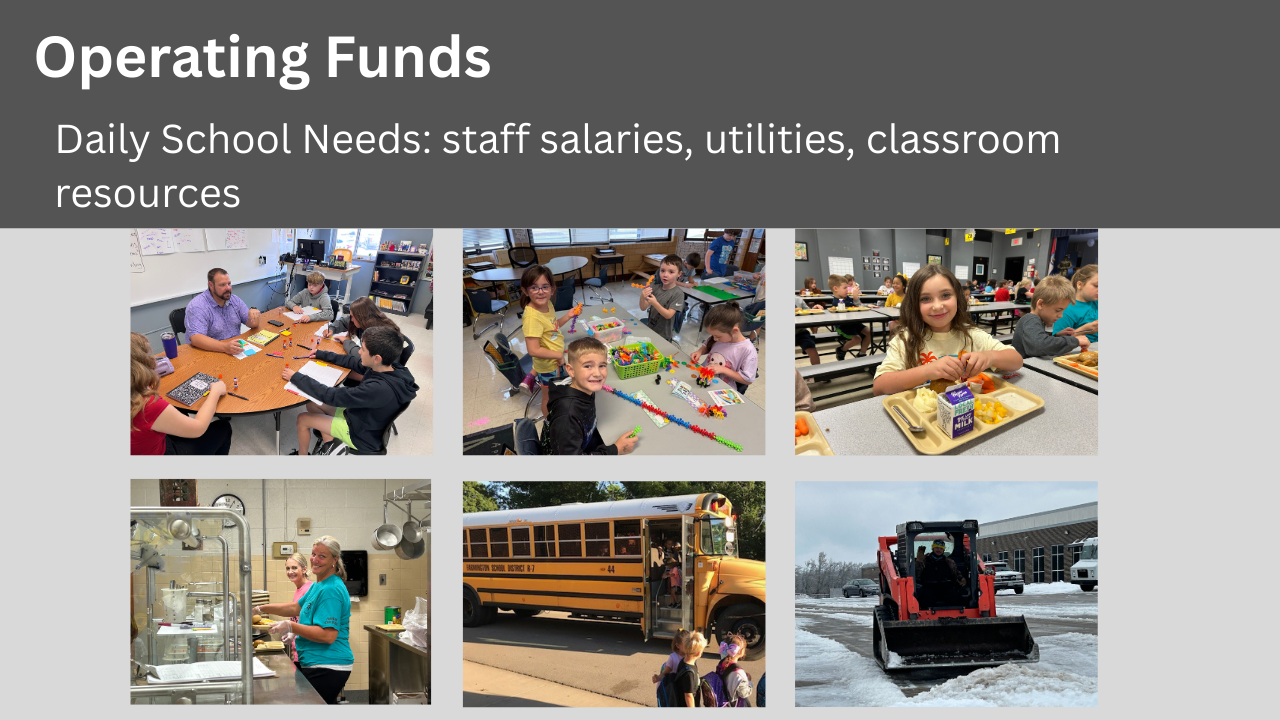
Operating fund sample pictures

Operating & Teachers Funds

(Often referred to as Fund 1 & Fund 2)

Operating funds support the day-to-day needs of the district, including:

  • Staff salaries and benefits

  • Utilities, food, and supplies

  • Instructional materials, resources, and professional development

  • Transportation bus driver salaries, fuel, and vehicle maintenance

  • Maintenance of buildings, grounds, and equipment

The Operating Fund in the Farmington R-7 School District is the primary source of funding for ongoing educational operations: teacher pay, instructional costs, transportation, support services, and everyday expenses that keep schools open and functioning. It’s governed by Missouri statutes and DESE accounting rules that ensure funds are spent on operational needs rather than on construction or debt obligations.

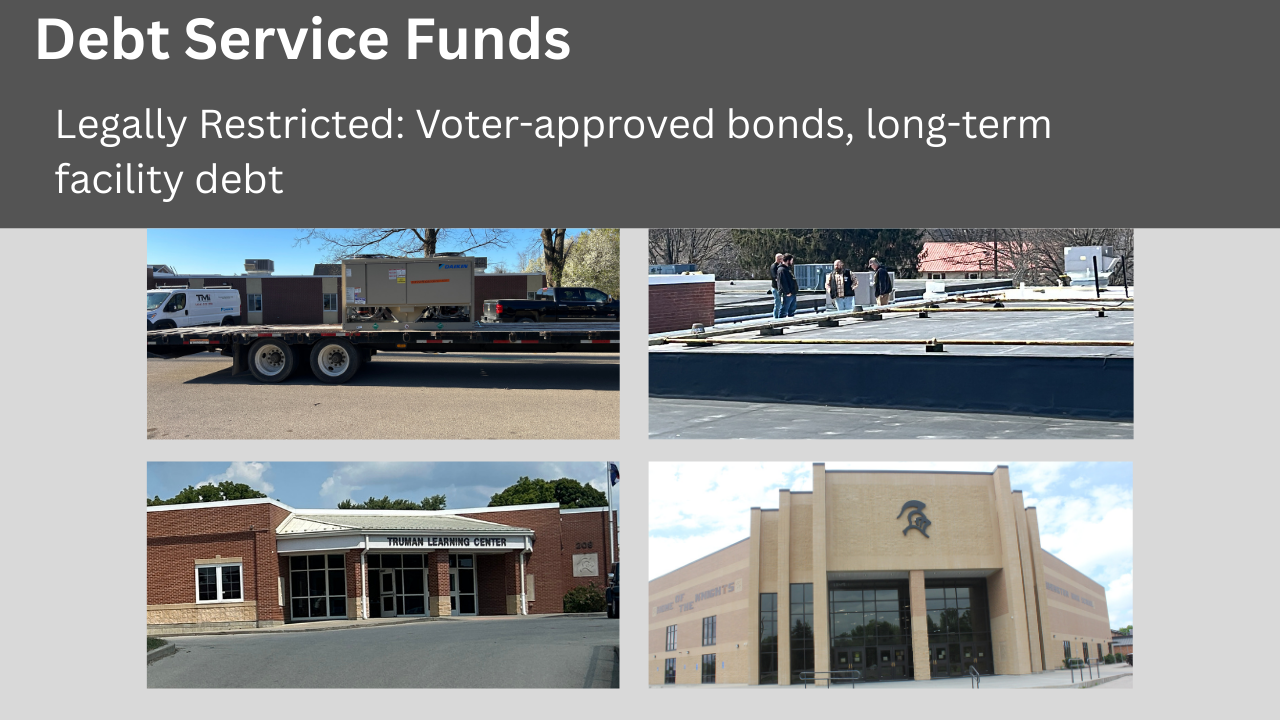
Debt Service - legally restricted voter-approved bons, long-term facility debt

Debt Service Funds

(Often referred to as Fund 3)

Debt service funds are restricted funds used only to pay for voter-approved debt, such as:

  • Bond payments

  • Interest on long-term construction or facility projects

The Debt Service Fund is a legally restricted school district fund used only to pay back long-term debt that voters have approved.

Think of it as the district’s mortgage-and-loan payment account.

Money in this fund cannot be used for classrooms, salaries, supplies, or daily operations — and operating funds cannot be used to pay debt unless the law explicitly allows a transfer.

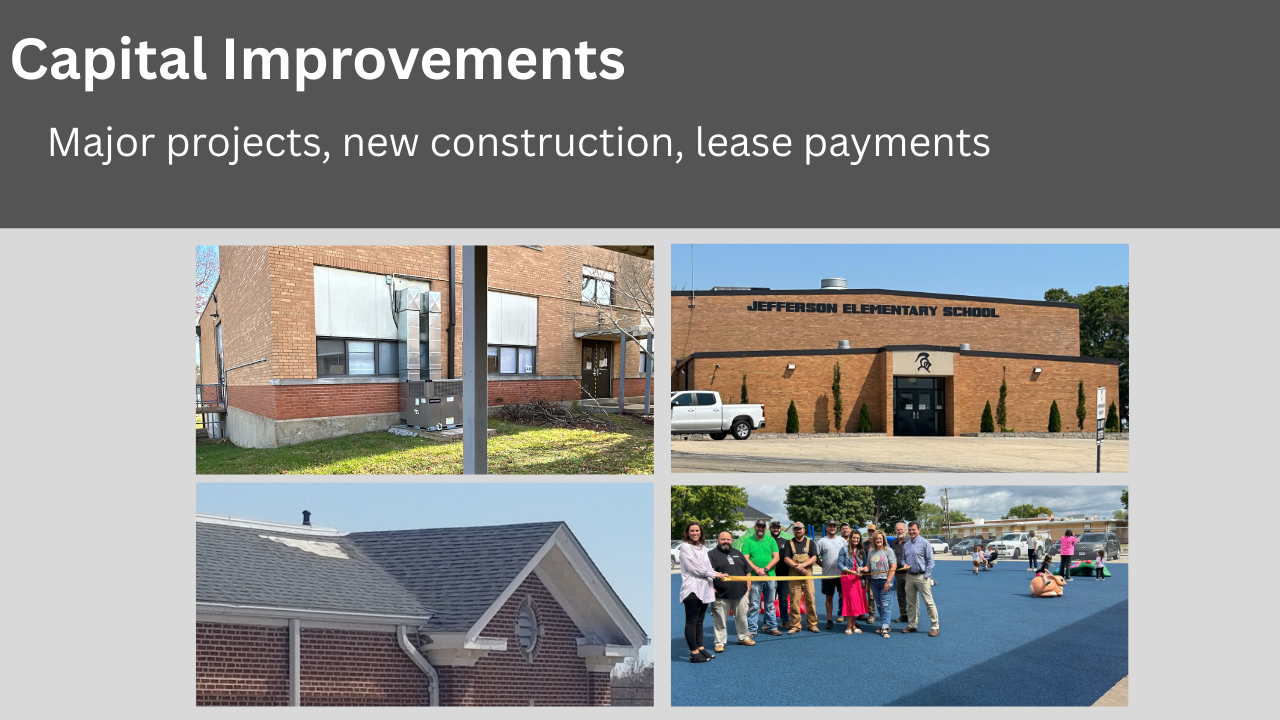
Capital Improvements major projects, new construction, lease payments

Capital Improvements

(Often referred to as Fund 4)

The Capital Improvements Fund (often called the Capital Projects Fund) is used only for major, long-term investments in school facilities and infrastructure.

Think of it as the district’s construction and major renovation fund.

It exists to pay for big, one-time projects that last many years, not daily school operations.

The Capital Improvements Fund is for big, long-lasting investments:

  • Buildings, major renovations, land, and infrastructure.

It cannot be used to run schools day-to-day, and day-to-day funds cannot replace it.

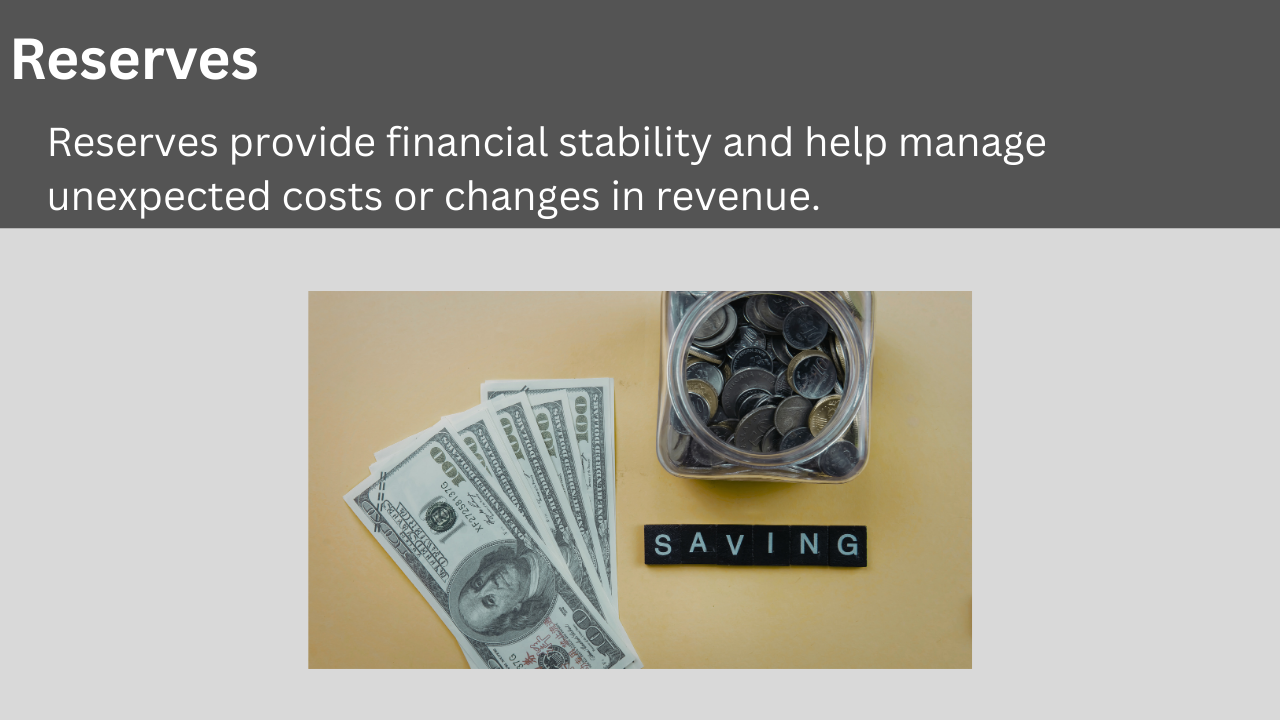
Reserves provide financial stability and help manage unexpected costs or changes in revenue.

Reserves

(Think savings)

Reserves are unspent fund balances which is money the district has already received but has not yet spent.

They are not extra or hidden money, and they are not a separate fund. They are the ending balance inside each fund (Operating, Debt Service, Capital, etc.).

Think of reserves like:

  • A household savings account that sits inside your checking account, not a new paycheck.

Budget Planning & Projections

Budget planning is the process of deciding how the district will spend money in the coming year.

Projections are educated forecasts of:

  • Future revenues

  • Future expenses

  • Reserve levels

  • Financial risks

Think of it as a multi-year financial weather forecast for the district.

Annual Secretary of the Board Report (ASBR)

The Annual Secretary of the Board Report (ASBR) is the official, year-end financial report every Missouri public school district must file with the state.

Think of it as the district’s financial “report card” for the year showing exactly where money came from, where it went, and what’s left.

Audit Reports

A school district audit is an independent, third-party review of the district’s finances to confirm that:

  • Money was spent legally

  • Financial statements are accurate

  • Internal controls are working

  • State and federal rules were followed

The auditors do not work for the district. They work for the district patrons to ensure that the district is maintaining financial fidelity.

Think of it as a financial inspection, not a performance review and not a budget redo.

Who Requires the Audit

Missouri law requires:

  • Every public school district to be audited annually

  • The audit to be performed by a licensed independent CPA firm

  • The completed audit to be submitted to DESE

Quarterly Financial Reports

Brief explanation goes here

Financial Policies

Last Updated: January 2026